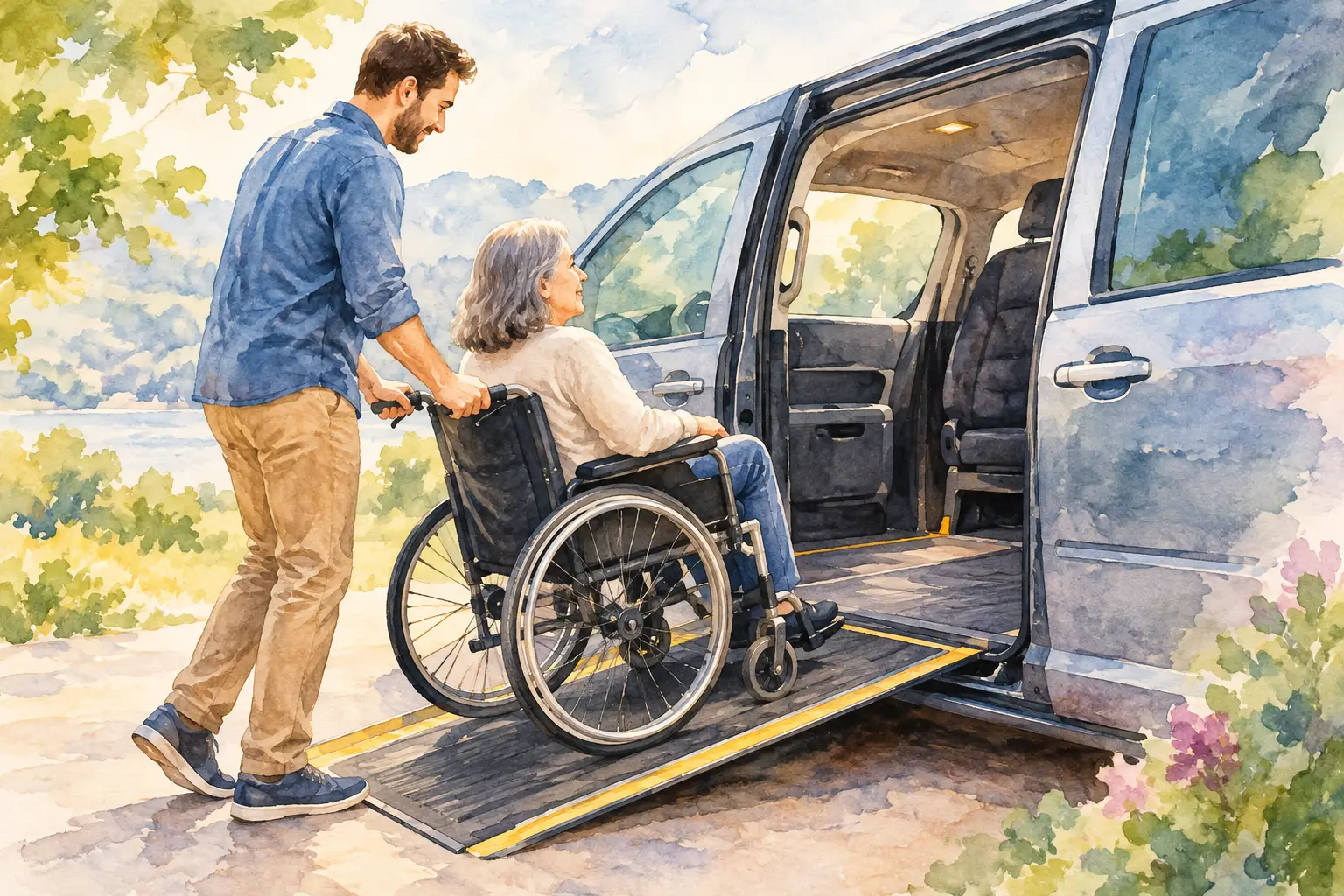
A journey can feel stressful before the vehicle has even arrived when you are wondering whether the wheelchair will fit, who will help, or how you will get in safely. This guide to wheelchair vehicle boarding explains what a well-planned accessible trip should look like, from the booking conversation at your door to a calm, dignified arrival.
For airport runs, hospital appointments, family visits, and special occasions, boarding should never feel rushed or uncertain. The right vehicle, enough time, and a driver who listens make a real difference.
Start With the Right Vehicle, Not Just a Bigger Car
A wheelchair-accessible vehicle is designed to carry a passenger safely while they remain in their wheelchair where appropriate. It is not simply a vehicle with extra luggage room. It should have a suitable ramp or lift, proper wheelchair restraints, an occupant safety belt, and enough headroom and space for a comfortable position during travel.
When booking, share the details that affect vehicle choice. The wheelchair's size, whether it is manual or powered, and whether the passenger will stay seated in it are all useful to know. A powered chair can be heavier and wider than a standard manual chair, while some high-backed or specialist chairs need additional clearance.
It also helps to mention luggage, traveling companions, mobility aids, and the destination. An airport trip may involve suitcases as well as a wheelchair. A cruise-port transfer may need room for several bags. Giving these details early means the transport provider can plan for the whole journey rather than trying to make do on the day.
A good operator will ask sensible questions rather than assume. At A & S Travel, we genuinely care about your experience, so suitable vehicle planning is part of making door-to-door travel feel straightforward.
Before Wheelchair Vehicle Boarding Begins
Boarding is easier when the pickup area is considered in advance. A steep driveway, loose gravel, a narrow path, or a busy roadside does not make travel impossible, but the driver needs to know what to expect. If there is a safer place nearby to position the vehicle, agree on it when you book or speak with the driver before pickup.
Allow a little extra time, especially for an early flight, a first journey with a new provider, or a trip involving a powered wheelchair. This is not about slowing anyone down. It is about avoiding pressure. A driver should never make a passenger feel that they need to hurry through a transfer that needs care.
Before the ramp or lift is used, the driver should park on stable, level ground where possible. The vehicle should be secured, hazards checked, and the boarding equipment set correctly. In poor weather, wet ramps and uneven surfaces deserve extra attention. Safety comes first, even when everyone is keen to get moving.
Personal comfort matters too
Ask for the boarding approach that feels most comfortable. Some passengers prefer clear verbal guidance throughout. Others are happy for the driver to get on with the setup quietly. If a companion normally assists with a particular routine, tell the driver what helps.
Personal assistance should always be respectful. The passenger should be addressed directly, asked before equipment is moved, and given time to answer. A wheelchair is part of a person's personal space, not something to push or adjust without permission.
A Step-by-Step Guide to Wheelchair Vehicle Boarding
Once the vehicle is positioned, the driver should explain what will happen next. For ramp access, this usually means lowering and securing the ramp, checking that it is stable, then guiding the wheelchair up at a safe pace. For a vehicle lift, the chair is positioned on the platform, brakes are applied as required, and the lift is operated smoothly into the vehicle.
The exact method depends on the vehicle and wheelchair. A ramp can be quick and practical, but it needs a sensible gradient and firm footing. A lift is often a better option for heavier powered wheelchairs or where ramp angles would be uncomfortable. There is no single best setup for every passenger. The best choice is the one that safely suits the person, chair, pickup point, and journey.
Inside the vehicle, the wheelchair should be positioned in the designated area and secured using the fitted restraint system. This normally includes four points that stabilize the wheelchair, along with a separate passenger seat belt. The chair's own lap belt is not usually a replacement for the vehicle's occupant restraint.
The driver should check that the wheelchair is stable without pulling straps excessively tight or interfering with controls, footplates, or medical equipment. If the passenger is uncomfortable, cannot reach something they need, or feels that their posture has changed, say so before the vehicle moves. Small adjustments are much easier while parked.
For safety, loose bags and mobility equipment should also be stored securely. A handbag, oxygen equipment, walking stick, or folded walker should not be left where it could shift during braking. This is particularly relevant on longer trips to airports, seaports, and rail stations, where roads and traffic conditions can change quickly.
During the Journey: Calm, Clear, and Flexible
A properly secured wheelchair is only one part of a comfortable ride. Driving style matters. Smooth acceleration, gentle braking, careful cornering, and sensible speed over uneven roads help every passenger feel more at ease.
Communication matters just as much. A driver should confirm the destination, ask whether the temperature is comfortable, and check if there are any preferences for the route or planned comfort stops. For a longer transfer, a brief stop may be helpful, but it should be discussed rather than assumed.
For airport travel, build in time for the accessible drop-off point and the distance from the vehicle to the terminal entrance. If a flight is delayed, a pre-booked provider that monitors flight information can adapt the return pickup plan. That removes one of the biggest worries after a long journey: wondering whether anyone will be there when you arrive.
Arriving Safely Is Part of the Service
The final transfer out of the vehicle deserves the same attention as boarding. The driver should choose the safest available stopping position, assess the ground conditions, release restraints in the right order, and operate the ramp or lift carefully. The passenger should not be rushed down a ramp just because there are other vehicles waiting.
At a hotel, station, clinic, or terminal, it is helpful for the driver to confirm that the passenger is at the correct entrance or agreed meeting point. Door-to-door service is not just a phrase. It means planning for the real start and end of the journey, not leaving someone at the nearest curb.
If a passenger is being met by family, a care team, or airport assistance staff, clear handover arrangements can make arrival feel more settled. For return journeys, confirm pickup instructions before parting ways, including the meeting location and a contact number.
Questions Worth Asking Before You Book
You do not need to know every technical detail, but a few direct questions can give you confidence. Ask whether the vehicle is suitable for your specific wheelchair, whether you can remain in the chair during travel, and how much space there is for companions and luggage. Ask how the driver will assist with boarding and whether extra time can be allowed at pickup.
It is also reasonable to ask about pricing before confirming. A fixed, upfront quote makes it easier to plan, especially when arranging a return airport transfer or a regular appointment journey. You should know what you will pay and what service has been arranged.
The most reassuring answer is not a vague promise that it will be fine. It is a clear plan: the right vehicle, a driver who knows the requirements, enough time to board safely, and a pickup arranged around your schedule.
A comfortable accessible journey begins with a conversation. Share what you need, ask the questions that matter to you, and choose transport that treats safety, dignity, and punctuality as part of the same service.